

The Journey of Sesame: From Ancient Seed to Global Skincare Tradition

Part of the OmVeda Botanical Library — exploring the botanicals, traditions and science behind Ayurvedic skincare.
Discover how one of the world's oldest cultivated plants travelled across continents, nourishing civilisations and becoming a cornerstone of traditional beauty rituals.
Imagine holding a single sesame seed in the palm of your hand.
Small enough to disappear between your fingertips, it seems almost impossible that something so unassuming could have travelled across continents, inspired ancient myths, illuminated temples, nourished generations and become the foundation of one of the world's oldest wellness traditions.
Yet for more than five thousand years, sesame has done exactly that.
Long before modern skincare laboratories and cosmetic science, people recognised that certain plants possessed extraordinary qualities. Sesame was one of them. Its naturally stable oil resisted spoilage, its seeds nourished communities, and its versatility allowed it to move effortlessly between the kitchen, the apothecary and the bathing ritual.
Its story is not confined to one civilisation. It begins in the ancient landscapes of Africa and the Indian subcontinent before following merchants across the deserts of Mesopotamia, into the temples of Egypt, along the Silk Roads to China and eventually into the homes and kitchens of Japan. Wherever it travelled, people found new ways to honour this remarkable little seed.
Today, sesame oil remains at the heart of Ayurvedic beauty rituals—a quiet reminder that some of humanity's oldest discoveries continue to enrich our lives thousands of years later.
One of the World's Oldest Oilseed Crops
Sesame is believed to be among the earliest plants deliberately cultivated for its oil. Archaeological evidence suggests sesame was being grown over 5,000 years ago, making it one of humanity's oldest oilseed crops.
Unlike many vegetable oils that spoil relatively quickly, sesame oil possesses exceptional natural stability thanks to its unique composition of lignans and naturally occurring antioxidants. This made it invaluable in ancient civilisations, where preserving food and oils without refrigeration presented a constant challenge.
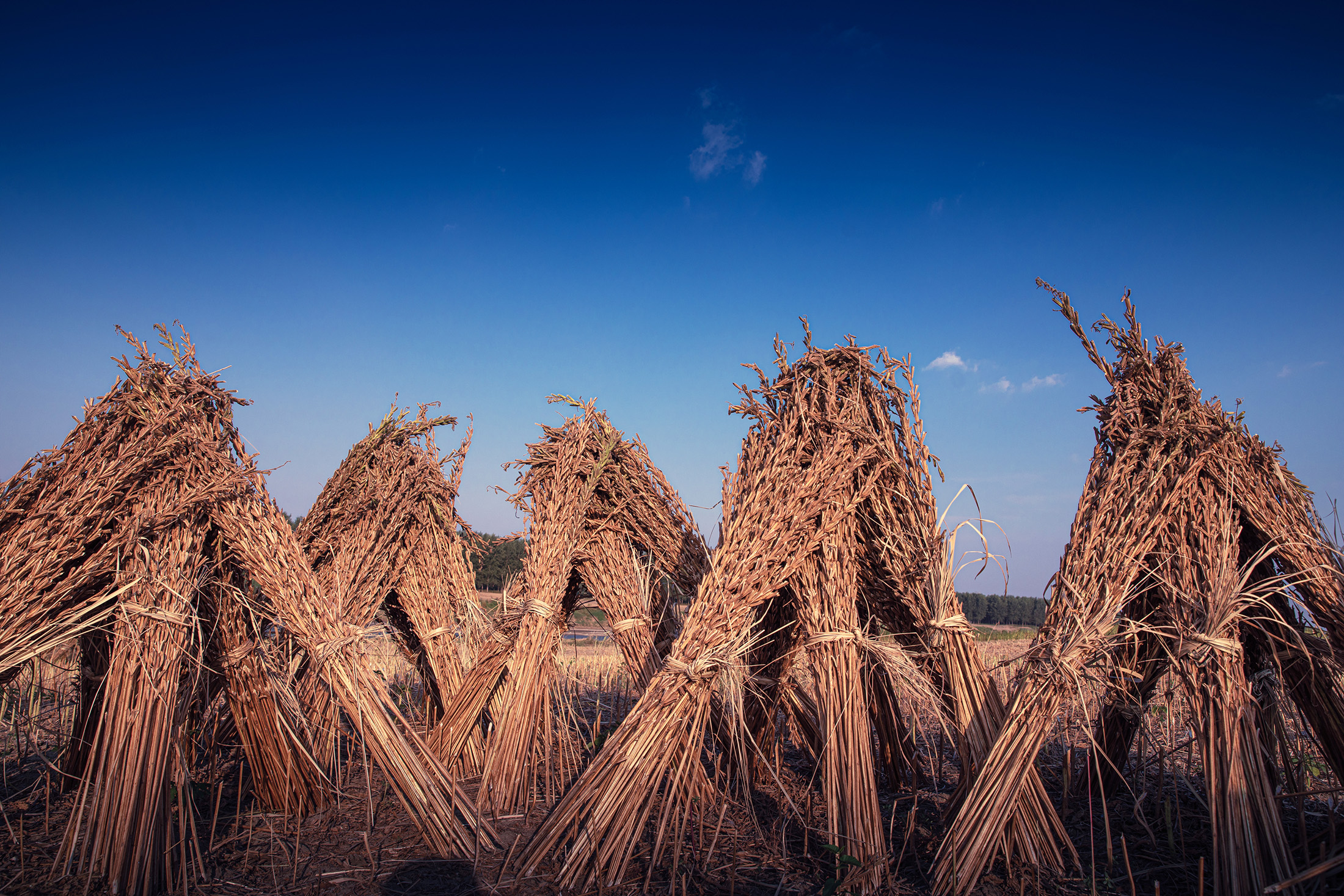
Traditional sesame harvest. Mature sesame plants are tied into bundles and stood upright to dry before the seed capsules naturally open. This time-honoured harvesting method helps reduce seed loss and continues to be used by growers in many parts of Asia and Africa.
Where Did Sesame Originate?
The story of sesame begins in two places. While the wild ancestors of the Sesamum genus evolved in Africa, most modern botanical and archaeological evidence suggests that cultivated sesame (Sesamum indicum) was domesticated on the Indian subcontinent over 5,000 years ago. From there it spread west into Mesopotamia and Egypt, and east into China, Korea and Japan through ancient trade routes.
India — Where Sesame Became Sacred
Known as Tila (तिल) in Sanskrit, sesame appears throughout the Vedas and later Ayurvedic texts, woven into traditions that continue to this day. It was pressed into oil, offered in sacred ceremonies, shared during festivals and used to nourish both body and spirit.
Even today, during Makar Sankranti, families exchange sweets made from sesame and jaggery with the blessing:
"Tilgul ghya, goad goad bola."
"Accept this sesame sweet and speak kindly."
In just a few words, an ordinary seed becomes a symbol of warmth, generosity and new beginnings.
Within Ayurveda, sesame oil found another enduring purpose. More than simply an ingredient, it became the preferred oil for massage and daily self-care—valued for its unique qualities and its ability to carry the virtues of other botanicals.
Mesopotamia — A Valuable Oil Crop
From the Indian subcontinent, cultivated sesame travelled west into Mesopotamia, where oil-producing crops were essential to everyday life.
Across the fertile lands surrounding the Tigris and Euphrates Rivers, plant oils were used for cooking, lighting, trade and ceremonial purposes. Sesame appears to have become part of this agricultural world as connections between South Asia and the ancient Near East expanded.
References traditionally interpreted as sesame appear in Mesopotamian records, although the translation of some ancient crop names remains debated by historians and archaeobotanists. What is clear is that stable botanical oils were highly valued, and sesame eventually became firmly established within the food and agricultural traditions of the region.
Ancient Egypt
Evidence suggests sesame reached Egypt through ancient trade networks linking Africa, the Near East and Asia.
Archaeological discoveries have found sesame seeds in ancient Egyptian sites, where the plant was valued as both a food and a source of oil. While olive and castor oils were also widely used, sesame contributed to the growing diversity of botanical oils available to Egyptian society.
Its inclusion within trade networks demonstrates how highly prized stable vegetable oils had become in the ancient world.
Along the Silk Roads
As merchants travelled between India, Persia, Central Asia and China, sesame travelled with them.
The Silk Roads carried far more than silk—they exchanged spices, medicines, botanical knowledge and agricultural crops. Sesame proved ideally suited to this movement. Its hardy seeds stored well during long journeys and adapted to diverse climates once planted.
Over centuries the plant became established across East Asia, where it found new culinary and cultural identities.
China and East Asia
In China, sesame has been cultivated for more than two thousand years and became an important ingredient in both cuisine and traditional wellness practices.
Black sesame seeds, in particular, developed a special cultural significance and continue to feature in desserts, porridges and festive foods. Sesame oil likewise became an essential cooking ingredient valued for its distinctive aroma.
Traditional Chinese medicine also incorporated sesame within broader dietary and wellness traditions, demonstrating how one botanical could become meaningful across different healing systems while retaining its own cultural identity.
Japan
In Japan, sesame is known as goma and has become one of the country's most recognisable culinary ingredients.
Ground sesame forms the basis of creamy sauces, dressings and seasonings, while toasted seeds are sprinkled over rice, vegetables and sushi. Traditional mortar and pestle grinding (suribachi and surikogi) remains an important part of Japanese food preparation, releasing the seeds' rich aroma immediately before serving.
Although sesame is best known through Japanese cuisine, its association with mindful preparation and appreciation of simple ingredients reflects values that resonate strongly with traditional wellness philosophies.

Historic botanical illustration of sesame (Sesamum orientale, now recognised as Sesamum indicum), East Asia, from the Seikei Zusetsu agriculture encyclopedia, 1804. Historical botanical works often used earlier scientific names that have since been revised.
A Botanical That Connected Cultures
What makes sesame remarkable is not simply its age, but its ability to cross cultural boundaries.
Mesopotamian farmers, Indian Ayurvedic practitioners, Egyptian traders, Chinese herbalists and Japanese cooks each discovered something unique within the same tiny seed. While their traditions differed, all recognised sesame as a dependable, nourishing botanical worthy of cultivation and respect.
Few plants have travelled so widely while remaining so closely connected to everyday life.
Like many of history's greatest travellers, sesame eventually returned to where its story first began. While the wild ancestors of the Sesamum genus evolved in Africa millions of years ago, the cultivated sesame we know today was most likely domesticated on the Indian subcontinent over 5,000 years ago. From there it travelled west with merchants into Mesopotamia before crossing back into Africa, where it became established in Egypt and, in time, throughout much of the continent. In many ways, sesame's journey came full circle.
Sesame at OmVeda
At OmVeda, sesame oil continues to honour this remarkable legacy.
Chosen not only for its long history within Ayurveda but also for its naturally stable composition and compatibility with other botanicals, sesame forms the foundation of many facial oils, body oils and massage formulations.
Combined with herbs such as saffron, manjistha, bala, vetiver and sandalwood, it continues a tradition that stretches back thousands of years while supporting contemporary botanical skincare.
Shop OmVeda Sesame products here
References
Plants of the World Online (Royal Botanic Gardens, Kew)
Sesamum indicum L.
https://powo.science.kew.org/
Bedigian, D. (2011). Sesame: The Genus Sesamum. CRC Press.
Bedigian, D. & Harlan, J.R. (1986). Evidence for Cultivation of Sesame in the Ancient World.